Amorphophallus Titanum (Titan Arum) Seeds: Growing Guide for Beginners
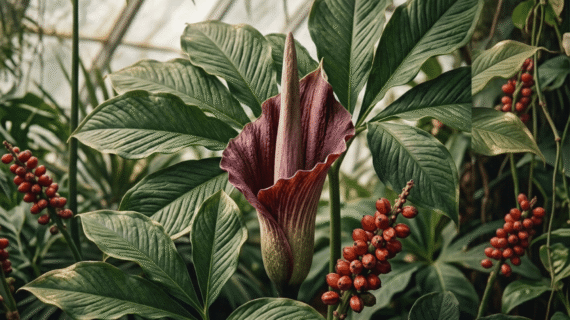
Growing Amorphophallus titanum, commonly known as the Titan Arum, is one of the most rewarding long-term projects for tropical plant enthusiasts. Famous for producing the world’s largest unbranched inflorescence and its unmistakable carrion scent during flowering, this remarkable species has become a prized addition to botanical gardens and private collections alike.
Although mature plants can take many years to bloom, raising a Titan Arum from seed allows collectors to observe every stage of its fascinating life cycle—from a tiny seedling to a massive underground tuber capable of supporting one of the most spectacular flowers in the plant kingdom.
If you are new to growing rare tropical plants, this guide explains everything you need to know to successfully germinate and cultivate Amorphophallus titanum from seed.
Understanding the Titan Arum Life Cycle
Unlike trees or shrubs, Amorphophallus titanum is a tropical geophyte that grows from a large underground tuber.
Its annual growth follows a repeating cycle:
- A single, tree-like leaf emerges.
- The leaf remains active for several months while producing energy.
- The leaf naturally dies back.
- The tuber enters dormancy.
- A new leaf—or eventually a flower—emerges during the next growing season.
Each growing cycle enlarges the tuber. Once the tuber reaches sufficient size and has accumulated enough energy, it may produce its first inflorescence instead of another leaf.
This process commonly takes 7–15 years, depending on growing conditions and cultivation practices.
Start with Fresh Seeds
Freshness is the single most important factor affecting germination.
Amorphophallus titanum produces recalcitrant seeds, meaning they cannot withstand drying or prolonged storage. Viability declines rapidly after harvest, so seeds should be sown as soon as possible after arrival.
When purchasing seeds:
- Choose reputable suppliers.
- Confirm the harvest date whenever possible.
- Avoid seeds that have been stored for several months.
- Sow immediately rather than storing them.
Fresh seeds consistently provide higher and more uniform germination rates.
Preparing the Seeds
If seeds still contain remnants of their orange-red fruit pulp, remove it completely before sowing.
Fruit residue encourages fungal growth and may inhibit germination.
After cleaning:
- Rinse the seeds with clean water.
- Allow excess surface moisture to drain.
- Sow immediately.
Avoid allowing the seeds to dry for extended periods.
Choosing the Right Germination Medium
Titan Arum seeds require a growing medium that retains moisture while allowing excellent drainage and oxygen around the developing roots.
Suitable media include:
- Fine coconut coir
- Long-fiber sphagnum moss
- Peat moss mixed with perlite
- High-quality seed-starting mix
Avoid:
- Heavy clay soils
- Dense garden soil
- Media that remain waterlogged
Healthy root development depends on both moisture and adequate air spaces.
How to Sow the Seeds
Plant each seed approximately one seed thickness below the surface of the growing medium.
Space seeds several centimeters apart to reduce competition and improve airflow.
After sowing:
- Lightly cover the seeds.
- Water gently.
- Avoid compacting the soil.
Containers should include drainage holes to prevent standing water.
Ideal Germination Conditions
Creating stable tropical conditions greatly improves success.
Temperature
Maintain temperatures between 25–30°C (77–86°F).
Warmth stimulates embryo development and encourages faster germination.
Humidity
High humidity benefits both seeds and emerging seedlings.
A humidity dome or propagation chamber may help retain moisture, provided adequate ventilation prevents fungal growth.
Moisture
Keep the growing medium evenly moist at all times.
Avoid allowing it to dry completely, but never leave it saturated.
Excess water is one of the most common causes of seed failure.
Light
Place seed trays in bright, indirect light.
Avoid direct midday sunlight, which can overheat containers and dry the growing medium too quickly.
Germination Time
Fresh Amorphophallus titanum seeds typically germinate within 3–8 weeks.
However, some seeds naturally emerge later.
Do not discard seed trays prematurely, as viable seeds may continue germinating for several months.
Caring for Young Seedlings
After germination, seedlings produce a small leaf that immediately begins storing energy in a developing tuber.
Provide:
- Bright filtered light
- Warm temperatures
- Good air circulation
- Consistent moisture
- Balanced liquid fertilizer at quarter strength once active growth is established
Healthy leaves directly influence tuber development.
The larger the leaf grows, the more energy the tuber stores for future growth.
Understanding Dormancy
Many beginners worry when the first leaf dies.
In reality, dormancy is a completely normal stage.
As the leaf senesces:
- Water gradually less often.
- Allow the soil to become only slightly drier than during active growth.
- Keep the tuber warm.
- Resume regular watering when new growth appears.
Never assume a dormant tuber is dead simply because no leaves are visible.
Repotting Young Plants
As the tuber enlarges, move it into progressively larger containers.
Choose pots that:
- Drain freely
- Provide sufficient depth
- Leave room around the tuber for root development
Repot during dormancy whenever possible to minimize root disturbance.
Fertilizing for Strong Growth
During active growth, apply a balanced fertilizer every two to four weeks.
Nutrients support:
- Leaf expansion
- Root development
- Carbohydrate storage
- Tuber enlargement
Avoid excessive fertilization, especially on young seedlings.
Too much fertilizer may damage delicate roots.
Common Beginner Mistakes
Many cultivation problems result from simple errors rather than poor seed quality.
Using Old Seeds
Older seeds lose viability quickly.
Fresh seed is essential.
Overwatering
Constantly saturated soil encourages fungal diseases and seed rot.
Cool Temperatures
Growth slows dramatically below optimal tropical temperatures.
Direct Sunlight
Young seedlings perform best in bright, filtered light rather than intense afternoon sun.
Expecting Rapid Growth
Titan Arum is a long-term project.
Developing a flowering-sized tuber requires years of consistent care and patience.
Frequently Asked Questions
How long does it take for Titan Arum seeds to germinate?
Fresh seeds usually germinate within 3–8 weeks under warm, humid conditions, although some may take longer.
How long until the first flower appears?
Most plants require approximately 7–15 years to flower, depending on cultivation conditions and tuber growth.
Can Titan Arum be grown indoors?
Yes. It grows well in greenhouses, conservatories, or bright indoor spaces with warm temperatures and high humidity. Supplemental lighting may be beneficial where natural light is limited.
Do Titan Arum seeds require stratification?
No. As a tropical species, Amorphophallus titanum does not require cold stratification.
Why did my seedling disappear?
The visible leaf naturally dies back as the plant enters dormancy. The underground tuber remains alive and will produce a new leaf during the next growth cycle.
Final Thoughts
Growing Amorphophallus titanum from seed is a rewarding journey that combines patience, careful observation, and consistent cultivation. While the species is famous for its colossal inflorescence, its true appeal lies in watching the plant gradually transform from a tiny seed into an impressive botanical specimen over many years.
By starting with fresh seeds, maintaining warm and humid conditions, using a well-drained growing medium, and understanding the plant’s natural cycle of growth and dormancy, even beginners can successfully cultivate the Titan Arum. Although flowering is a long-term goal, each new leaf and every increase in tuber size marks another step toward growing one of the world’s most extraordinary plants.
If you are unsure what to choose, feel free to contact us through email or WhatsApp. We are happy to recommend species based on your climate, experience, and germination goals.