How to Germinate Rafflesia and Corpse Flower Seeds
Many tropical plant enthusiasts search for how to germinate Rafflesia and corpse flower seeds, assuming these two extraordinary plants grow in similar ways. Although both produce enormous flowers and originate from Southeast Asian rainforests, their biology differs completely.
Understanding these differences is essential before purchasing seeds or attempting propagation. One can be grown successfully by dedicated collectors, while the other remains one of the greatest challenges in botany.
This guide explains how each species reproduces, whether their seeds can be germinated, and what you can realistically expect.
Rafflesia and Corpse Flower Are Not the Same Plant
One of the most common misconceptions is that Rafflesia and the corpse flower are identical. In reality, they belong to entirely different plant families.
Rafflesia
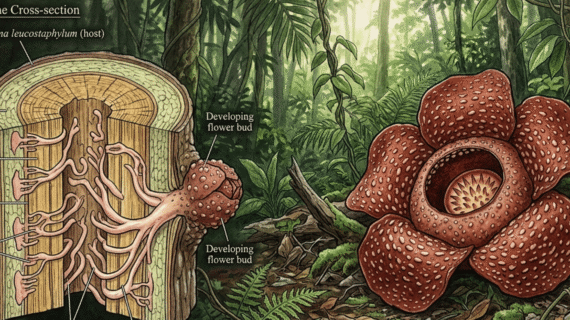
Rafflesia is a holoparasitic flowering plant. It has no leaves, stems, roots, or chlorophyll. Nearly its entire life occurs hidden inside the tissues of a host vine belonging to the genus Tetrastigma. Only the enormous flower emerges above the forest floor.
Corpse Flower (Amorphophallus)
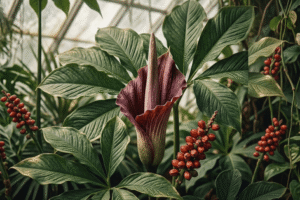
The corpse flower usually refers to Amorphophallus titanum and several related species. Unlike Rafflesia, these plants possess a large underground tuber that stores energy and produces leaves and inflorescences in alternating growth cycles.
Although both flowers emit an odor resembling decaying flesh to attract carrion insects, their life cycles are completely unrelated.
Can You Germinate Rafflesia Seeds?
The short answer is not under normal cultivation.
Despite decades of research, successful artificial germination of Rafflesia seeds remains exceptionally rare and poorly understood.
Several factors make germination extremely difficult:
- Seeds must reach living Tetrastigma host tissue.
- Scientists still do not fully understand how infection begins.
- Germination likely depends on specific microorganisms, environmental conditions, and host physiology.
- Development occurs entirely inside the host vine and may take years before any flower appears.
Unlike ordinary flowering plants, Rafflesia seeds cannot simply be placed in soil, sphagnum moss, or a seed tray.
For this reason, commercially offered “Rafflesia seeds” almost never produce plants under normal horticultural conditions.
Why Is Rafflesia So Difficult to Propagate?
Rafflesia behaves more like an internal parasite than a conventional plant.
Its seed must somehow penetrate living host tissue before any visible growth occurs. Researchers believe natural dispersal probably involves forest mammals or other animals that transport seeds into damaged portions of host vines.
Even botanical gardens with access to natural host plants have experienced only limited success maintaining flowering populations.
Because the complete life cycle remains incompletely understood, Rafflesia continues to rank among the world’s most difficult flowering plants to cultivate.
Can You Germinate Corpse Flower Seeds?
Yes.
Unlike Rafflesia, Amorphophallus seeds germinate readily when they are fresh and provided with warm, humid conditions.
Most species in the genus produce seeds that remain viable only for a relatively short period, making freshness the single most important factor for successful germination.
Collectors around the world routinely grow species such as:
- Amorphophallus titanum
- Amorphophallus borneensis
- Amorphophallus lambii
- Amorphophallus asper
- Amorphophallus variabilis
- Many other tropical species
How to Germinate Amorphophallus (Corpse Flower) Seeds
1. Use Fresh Seeds
Freshly harvested seeds consistently provide the highest germination rates.
As seeds age, viability declines rapidly. Always obtain seeds from reputable growers who harvest and ship them promptly.
2. Remove Fruit Pulp
If seeds arrive inside ripe berries, gently remove all remaining pulp.
Fruit residue can encourage fungal growth and reduce germination success.
Wash the seeds thoroughly before sowing.
3. Prepare a Well-Drained Medium
A suitable germination mix should retain moisture while allowing abundant oxygen around the seed.
Good options include:
- Fine coconut coir
- Sphagnum moss
- Perlite mixed with peat
- Fine seed-starting mix
Avoid heavy garden soil.
4. Sow at the Correct Depth
Plant seeds approximately one seed thickness below the surface.
Cover lightly without compacting the growing medium.
5. Maintain Warm Temperatures
Most tropical Amorphophallus species germinate best between: 25–30°C (77–86°F)
Consistent warmth greatly improves both germination speed and uniformity.
6. Keep Humidity High
Maintain evenly moist conditions without saturating the soil.
Excess water encourages fungal diseases and seed rot.
Good airflow helps prevent mold.
7. Be Patient
Depending on species and freshness, germination may occur within:
- 2–6 weeks for many species
- Up to several months for slower species
Avoid discarding seed trays too early.
Caring for Young Seedlings
After germination:
- Provide bright filtered light.
- Avoid direct afternoon sun.
- Water consistently but never leave pots waterlogged.
- Apply dilute balanced fertilizer only after the first true leaf develops.
- Protect seedlings from snails, slugs, and fungal diseases.
Each growing season, the underground tuber enlarges before eventually becoming capable of producing larger leaves and, years later, spectacular inflorescences.
Common Germination Mistakes
Many failures result from avoidable errors.
Using Old Seeds
Seed viability decreases rapidly in many tropical aroids.
Overwatering
Waterlogged soil deprives seeds of oxygen and encourages rot.
Low Temperatures
Cool conditions slow metabolism and delay germination.
Poor Drainage
Dense soil creates anaerobic conditions harmful to developing embryos.
Insufficient Patience
Some species naturally require weeks or even months before sprouting.
Frequently Asked Questions
Can Rafflesia be grown from seed at home?
Currently, no reliable method exists for home cultivation. Germination requires infection of a living Tetrastigma host under conditions that remain poorly understood.
Is Amorphophallus titanum easy to grow?
It is considered an intermediate to advanced species. Germination is relatively straightforward with fresh seeds, but growing the plant to flowering requires years of proper care.
How long do corpse flower seeds remain viable?
Most species germinate best when sown within days or weeks after harvest. Extended storage generally reduces viability.
Do corpse flower seeds require stratification?
No. Tropical Amorphophallus species do not require cold stratification.
Why do people confuse Rafflesia with the corpse flower?
Both produce enormous, foul-smelling flowers native to Southeast Asian rainforests. However, they belong to different plant families and have completely different life cycles.
Final Thoughts
Although Rafflesia and the corpse flower share fame for their gigantic, carrion-scented blooms, their propagation methods could hardly be more different.
Rafflesia remains one of the least understood flowering plants on Earth. Its dependence on a living host vine and highly specialized life cycle means there is currently no practical method for germinating its seeds in cultivation.
Amorphophallus species, by contrast, are well within reach of dedicated collectors. With fresh seeds, warm temperatures, high humidity, and a well-drained growing medium, enthusiasts can successfully raise these remarkable plants from seed and enjoy watching their impressive tubers develop over the years.
For collectors interested in growing extraordinary tropical species, understanding this distinction is the first step toward realistic expectations and long-term success.
If you are unsure what to choose, feel free to contact us through email or WhatsApp. We are happy to recommend species based on your climate, experience, and germination goals.