Why Rare Seed Germination Rates Are Never 100% (And What Actually Affects It)
One of the most common questions from plant collectors is, “Why didn’t every seed germinate?” Whether growing rare aroids, palms, tropical fruit trees, or rainforest species, many beginners expect every healthy-looking seed to produce a seedling.
The reality is that no seed batch has a guaranteed 100% germination rate. Even under ideal laboratory conditions, some seeds naturally fail to germinate. This is a normal characteristic of plant reproduction rather than a sign of poor seed quality.
Understanding what influences germination helps collectors set realistic expectations, improve their growing techniques, and evaluate seed quality more accurately.
Germination Is a Biological Process, Not a Guarantee
Every seed contains a living embryo. Although the embryo has the potential to become a plant, successful germination depends on a combination of genetic quality, environmental conditions, and proper handling.
Unlike manufactured products, seeds are living organisms. Each one develops independently during pollination and fruit formation, meaning natural variation exists even within the same fruit.
As a result, some seeds develop into vigorous seedlings, while others may remain dormant, germinate slowly, or never sprout at all.
Genetics Play a Major Role
Not every seed produced by a plant is genetically identical in terms of vigor.
Several natural factors influence seed quality, including:
- Pollination success
- Parent plant health
- Embryo development
- Nutrient allocation during fruit formation
- Natural genetic variation
Even seeds harvested from the same fruit may differ significantly in their ability to germinate.
In wild plant populations, producing more seeds than necessary is a survival strategy. Nature does not expect every seed to become a mature plant.
Seed Freshness Is Often the Most Important Factor
For many tropical species, freshness has a greater impact on germination than any other single factor.
Unlike many temperate plants, numerous tropical seeds are classified as recalcitrant seeds. These seeds cannot tolerate drying and lose viability rapidly after harvest.
Examples include many species of:
Some remain highly viable for only a few weeks, while others begin losing germination potential within days.
Freshly harvested seeds almost always outperform seeds that have been stored for extended periods.
Storage Conditions Matter
Improper storage can dramatically reduce germination rates before seeds even reach the grower.
Factors that shorten seed life include:
- High temperatures
- Low humidity for recalcitrant species
- Excess moisture causing fungal growth
- Repeated temperature fluctuations
- Poor ventilation
- Physical damage during transport
Even perfectly healthy seeds gradually lose vigor over time as their internal tissues age.
Environmental Conditions Affect Every Seed
Each species has evolved to germinate under specific environmental conditions.
Successful germination depends on providing the proper balance of:
Temperature
Most tropical rainforest species germinate best between 25–30°C (77–86°F).
Temperatures that are too low slow metabolism, while excessive heat may damage embryos.
Moisture
Seeds require consistent moisture to activate metabolic processes.
However, excessive water fills air spaces in the growing medium and deprives seeds of oxygen, often causing rot before germination begins.
Moist—not saturated—is the goal.
Oxygen
Many growers overlook oxygen.
Seeds actively respire during germination, requiring oxygen for cellular activity. Dense or waterlogged soil reduces oxygen availability and significantly lowers success.
Well-drained media consistently outperform heavy garden soil.
Light
Some species require light for germination, while others germinate better in darkness.
Most tropical tree and aroid species germinate successfully when lightly covered with growing medium.
Dormancy Can Delay Germination
Not every viable seed germinates immediately.
Some species possess natural dormancy mechanisms that delay germination until environmental conditions become favorable.
Dormancy may result from:
- Hard seed coats
- Immature embryos
- Chemical inhibitors
- Physiological adaptations
These seeds remain alive but inactive until dormancy is naturally broken.
Patience is often one of the most valuable tools for collectors.
Seed-Borne Fungi and Bacteria
Microorganisms exist naturally on many seeds.
Under favorable conditions they remain harmless, but excessive humidity, stagnant air, or contaminated growing media can encourage fungal or bacterial growth.
Common problems include:
- Seed rot
- Mold development
- Damping-off disease
- Embryo decay
Using clean containers, sterile growing media, and proper airflow significantly reduces these risks.
Handling During Shipping
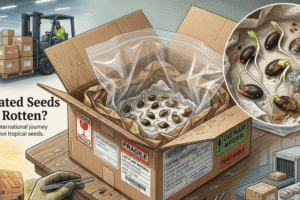
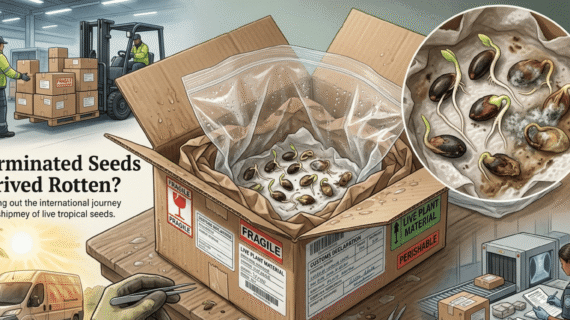
Rare tropical seeds frequently travel internationally before reaching collectors.
Although reputable sellers package seeds carefully, transportation inevitably exposes them to changing conditions such as:
- Temperature fluctuations
- Transit delays
- Compression
- Vibration
- Temporary dehydration
Longer shipping times generally increase the likelihood of reduced viability, particularly for recalcitrant tropical species.
Species Naturally Differ in Germination Rates
Different species have different biological expectations.
Some tropical plants routinely achieve very high germination rates under proper conditions.
Others naturally germinate less consistently.
For example:
| Species Group | Typical Germination Characteristics |
|---|---|
| Amorphophallus | Usually high with fresh seed |
| Syzygium | Often rapid and reliable |
| Durio | High if extremely fresh |
| Artocarpus | Generally excellent when fresh |
| Some rainforest understory species | Naturally slower and less uniform |
Comparing different species directly can create unrealistic expectations.
Human Error Is More Common Than Most People Think
Even experienced growers occasionally lose seeds because of cultivation mistakes.
Common causes include:
- Sowing seeds too deeply
- Allowing media to dry completely
- Keeping soil continuously waterlogged
- Using old or contaminated potting mix
- Exposing seedlings to extreme temperatures
- Discarding seed trays too early
Improving growing practices often increases germination success more than changing seed suppliers.
What Is Considered a Good Germination Rate?
There is no universal percentage.
A realistic germination rate depends on:
- Species
- Seed age
- Storage conditions
- Shipping duration
- Germination environment
- Genetic variation
For many fresh tropical seeds, germination rates above 70–90% are considered excellent.
Some rare rainforest species naturally produce much lower percentages despite excellent handling.
Professional seed banks, botanical gardens, and research institutions also experience variable germination rates depending on the species involved.
How to Maximize Germination Success
Although 100% germination cannot be guaranteed, collectors can significantly improve results by following a few best practices:
- Purchase freshly harvested seeds from reputable suppliers.
- Sow seeds as soon as possible after arrival.
- Use a clean, well-drained germination medium.
- Maintain consistent warmth between 25–30°C (77–86°F).
- Keep the growing medium evenly moist but never saturated.
- Provide good airflow to reduce fungal growth.
- Label seed trays with sowing dates.
- Be patient, as some tropical species require several weeks or even months to germinate.
Frequently Asked Questions
Why don’t all healthy-looking seeds germinate?
External appearance does not always reflect internal viability. Some seeds contain underdeveloped embryos, while others lose vigor through aging or environmental stress despite looking normal.
Can germination rates reach 100%?
Occasionally, a small batch of exceptionally fresh seeds may achieve nearly 100% germination under ideal conditions. However, this is uncommon and should not be expected consistently.
Do expensive rare seeds germinate better?
Price usually reflects rarity and availability rather than germination performance. Even highly valuable seeds remain subject to the same biological limitations as common species.
Does soaking seeds improve germination?
For some species, soaking can speed water absorption and encourage germination. However, prolonged soaking may damage seeds that are sensitive to excess moisture. Always follow species-specific recommendations.
Should I throw away a seed tray if nothing sprouts after two weeks?
Not necessarily. Many tropical species germinate slowly. Depending on the species, viable seeds may continue emerging for several weeks or even months.
Final Thoughts
Rare tropical seeds are living organisms shaped by genetics, environmental conditions, and natural variation. Even the freshest, highest-quality seed batch will almost never produce perfect germination because biology simply does not work that way.
Rather than expecting every seed to sprout, experienced collectors focus on providing the best possible conditions: fresh seed, appropriate temperatures, consistent moisture, clean growing media, and patience. By understanding the factors that influence germination, you can improve your success rate, make informed purchasing decisions, and enjoy the rewarding process of growing rare plants from seed.
If you are unsure what to choose, feel free to contact us through email or WhatsApp. We are happy to recommend species based on your climate, experience, and germination goals.